
Plan Your Group's Perfect Golf Outing at Public Courses
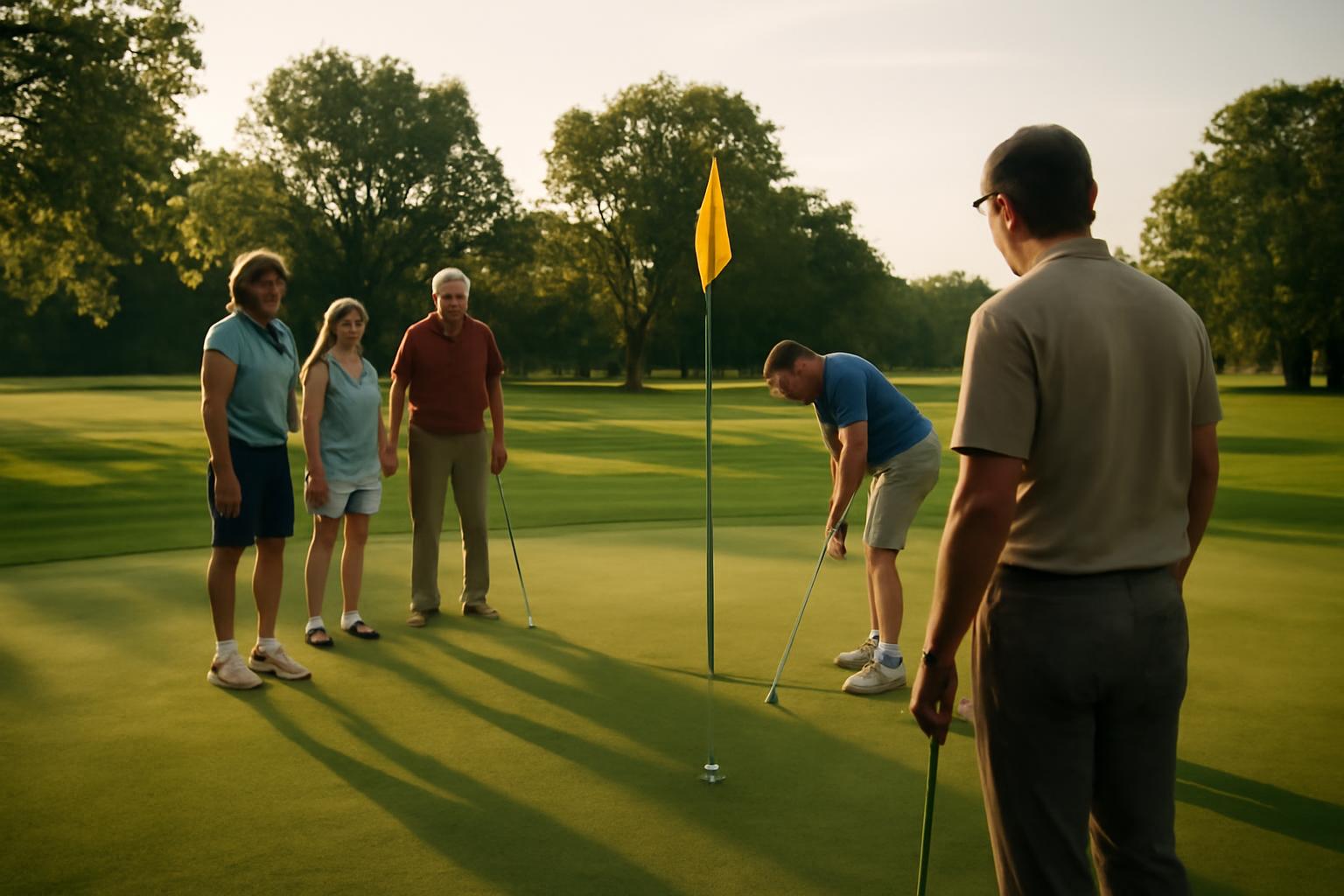
Planning a smooth golf outing at a public course usually comes down to four things: choose a course that fits the group, book inside the real release window, use a format that includes weaker players, and protect pace from the first tee. That framework is most useful for the kinds of outings public courses handle every day: friend groups, company days, family reunions, and smaller charity events.
This guide is intentionally about golf outing planning at public courses, not every kind of golf event. That matters. Public tracks offer real range, from lower-cost municipal layouts to resort-access public courses, but policies, booking windows, group services, and pace conditions can vary sharply by venue. The safest approach is to use broad public-course patterns where they are well supported, and treat everything else as course-specific until confirmed in writing.
If you work through the day in the right order—course fit, booking, format, budget, pace, and logistics—the event usually feels simpler for everyone involved.
What Is a Golf Outing?
A golf outing is generally a group golf event built around social experience first and competition second. That is the clearest practical difference between an outing and a more formal tournament.
A tournament usually implies more structure: scoring, prizes, winners, and a more competitive tone. An outing usually emphasizes networking, team building, celebration, client entertainment, or a low-pressure fundraiser. In real life, many public-course events sit in the middle: they keep score and hand out awards, but still feel relaxed.
That distinction is useful because it shapes the rest of your planning:
- Outing: inclusive, social, easier for occasional golfers
- Tournament: more competitive, more demanding on players
- Hybrid event: common for public-course charity and corporate play
For mixed-skill groups, that usually points toward a scramble. In a scramble, everyone hits, the team chooses the best shot, and all players continue from there. That format is forgiving, keeps beginners engaged, and tends to avoid the most awkward part of group golf: weaker players feeling like they are slowing everyone down.
Some public-course operators explicitly market outing support for this kind of day. For example, Cincinnati Recreation Commission says its public courses host corporate functions, family reunions, charity fundraisers, and social events, and lists items such as cart assignments, scoring, beverage carts, contest holes, and optional leaderboard upgrades. Baltimore County Golf similarly markets public-course outing services including printed materials, scoreboards, practice areas, beverage carts, and catering options at several of its venues. Those are operator-reported examples, not proof that every public course offers the same package.
That is the key takeaway: a public course is not just a place to book four tee times. Some venues actively support outings. Others treat a group as a cluster of ordinary tee-time reservations. You need to find out which model your course uses.
A practical naming rule:
- Call it a golf outing when the experience matters more than the leaderboard.
- Call it a tournament when competition is central.
- Expect a hybrid for many public-course corporate and charity events.
That framing helps players understand the day before they arrive, and it helps you pick a course and format that actually fit your field.
Selecting the Right Public Course for Your Group
The best public course for a golf outing is not the best course on paper. It is the course that best fits your players’ ability, travel reality, pace tolerance, and budget.
The first screening tool is slope rating. Slope runs from 55 to 155, with 113 as the neutral baseline. It measures how much harder a course plays for a bogey golfer relative to a scratch golfer. For group planning, that matters because a course that stronger players enjoy can still be a poor outing choice if the middle of your field is made up of casual golfers.
Use slope as a filter, not the whole answer:
- If the group includes many infrequent golfers, avoid making the day too hard.
- If most players are solid and play regularly, you have more room to stretch.
- Match the course to the middle of the group, not the best player in it.
Just as important is the course’s pace reputation. Tee Directory’s public-course guidance treats 4 to 4.5 hours as a reasonable walking pace target for a foursome over 18 holes. If a course already has a reputation for slow weekend rounds, your outing can turn into a very long day.
When comparing courses, ask direct questions:
- What is a normal 18-hole pace for foursomes?
- How far apart are tee times spaced?
- Does staff actively monitor pace?
- Are there known bottleneck holes?
- Is cart-path-only play common after rain?
- Is the group expected to walk, ride, or choose?
A simple comparison sheet helps. Before choosing a venue, score each course against the same categories.
| Factor | What to check |
|---|---|
| Difficulty | Slope rating, forced carries, length, rough, green severity |
| Pace | Typical round time, spacing, marshal or ranger presence, bottlenecks |
| Access | Drive times, parking, easy arrival and check-in |
| Group fit | Whether the course handles outing-size groups at all |
| Carts and walking | Required carts, walking policy, sharing rules |
| Conditions | Recent condition reports, wet-weather restrictions, aeration timing |
| Food and beverage | Pre-round food, post-round meal space, beverage cart availability, outside food/alcohol rules |
| Weather terms | Delay, shortening, reschedule, and deposit policy |
Location and access
A golf outing starts in the parking lot, not on the first tee. A course that is too far away or difficult to enter can hurt attendance and create a rushed start.
Check:
- drive times for most players
- parking capacity
- proximity to offices, hotels, or major roads
- whether registration can happen without crowding the entrance
Public systems can be useful here because they sometimes offer several geographic options under one operator. Cincinnati Recreation Commission, for instance, markets six public courses across different parts of the metro area. Baltimore County Golf similarly promotes multiple public venues within one system. Those are helpful examples of range, but you still need to compare the individual site that fits your players best.
Layout style and length
Do not stop at slope alone. Think about how the course will actually play for your field.
Look for stress points such as:
- forced carries
- long par 4s
- severe rough
- steep walks between holes
- greens that punish average putting
Sometimes the better outing choice is not a full-length championship course. Deep Cliff Golf Course in Cupertino, for example, markets its 18-hole executive course for outings and says it suits all abilities. That is an operator-reported example of a useful planning idea: for mixed groups, a shorter or friendlier layout can be a better event venue than a harder name-brand track.
Food, beverage, and alcohol rules
For many outings, food is part of the event rather than a side note. External outing-planning guides consistently tell organizers to ask about:
- pre-round food options
- post-round meal options
- catering minimums
- beverage cart service
- outside food rules
- outside alcohol rules
One planning guide notes that if a course is licensed to sell alcohol, outside alcohol may not be allowed on site. Treat that as a question to verify, not a universal rule.
Weather, rain policy, and aeration
Once deposits, meals, or sponsor commitments exist, weather policy becomes important. Ask for the course policy in plain language:
- What happens if there is rain?
- What counts as unplayable?
- Can the event be delayed, shortened, or rescheduled?
- What happens to deposits and catering commitments?
Also ask about aeration schedules. Planning guides specifically warn that recently punched or sanded greens can materially change the experience, especially when your group expects contests or post-round scoring.
Dress code, carts, and walking policy
These details are easy to miss and easy to turn into confusion.
Confirm:
- whether carts are included, optional, or required
- whether outing groups may walk
- how cart sharing is handled
- dress-code expectations
- whether cart-path-only restrictions are common in that season
For public-course outings, cart policy affects total cost, comfort, and pace.
Value and public-course fit
Municipal courses are often the first place organizers look because they can offer strong value. Tee Directory cites roughly $45 as a median green fee at a U.S. municipal course. That is a planning reference for the golf portion of the day, not a guaranteed outing rate and not an all-in event price.
The broader point is simpler: public golf gives you options at different price levels, but you still need direct confirmation on group treatment, carts, food, and timing.
Examples worth studying, carefully
Public-course directories and operator pages can still help if you read them as illustrations rather than proof of market standards.
Examples include:
- Cincinnati Recreation Commission marketing six public courses for outings
- Baltimore County Golf promoting outings at Greystone, The Woodlands, Diamond Ridge, Fox Hollow, and Rocky Point
- Michigan public-course outing directories listing public venues such as Bucks Run, Crystal Mountain, Grand Traverse Resort, and Timber Ridge
What these examples really show is that outing details are often handled by quote request, not by public tee sheet alone.
Before you commit, make one final verification pass:
- Is the course a fit for your skill mix?
- What is the expected pace?
- What is the real cart and walking policy?
- What are recent course conditions?
- When are the greens being aerated?
- What happens in bad weather?
- What meal options exist?
- Should your group use consecutive tee times or ask about an outing quote?
That last question often separates a smooth day from a frustrating one.
Booking Tee Times for Group Outings
Booking is where public-course outing plans either become orderly or stressful. The right strategy depends first on course type.
Municipal courses
Municipal courses most often release tee times seven days in advance, and the window commonly opens at midnight, 6 AM, or 7 AM local time. Some municipal systems use 14-day windows, but seven days is the most common pattern cited in the evidence.
That means prime Saturday morning times are usually won at the moment the window opens, not later in the day.
Before you book, confirm:
- the exact day the window opens
- the exact minute it opens
- whether the course uses a website or app
- whether group blocks are handled differently from normal public bookings
If your outing is small enough to live on the regular public tee sheet, set alarms and be ready at release time.
Resort public courses
Resort-access public courses often use a 30-day public booking window, while hotel guests or loyalty members may get 60 days or more. The published booking horizon is often the guest window, not the true public one.
If your outing includes travel and depends on one popular public resort course, the practical deadline is usually the minute the public window opens.
Daily-fee courses
Daily-fee and semi-private public tracks vary more. Common windows include 14, 21, or 30 days. Some also use dynamic pricing, which means earlier booking may help both availability and price.
A simple booking framework by outing type
Different outing types need different booking behavior.
Small social outing - If you only need a few consecutive times, the standard tee sheet may work. - The main risk is losing adjacency between tee times if you book late.
Company day or organized group - If you need grouped carts, clean staging, meal timing, or a scoring structure, ask whether the course has an outing contact instead of relying on the public tee sheet.
Charity or sponsor-backed event - If timing, meal service, signage, or same-time finish matters, move the conversation off the booking engine early and request a written group quote.
That distinction matters because online public booking works well for ordinary rounds. It is often less reliable once the event needs coordination.
Consecutive tee times vs. shotgun starts
Most smaller public-course outings use consecutive tee times. That is usually the easier option for casual groups and modest company outings.
A shotgun start means all groups start at once from different holes. It is not a scoring format; it is a start format. It can make meal timing and awards much easier because everyone finishes closer together. But it also usually requires direct course approval and enough event scale to justify blocking part or all of the course.
Public-course directories repeatedly point toward the same practical lesson: when your group needs more than a few ordinary tee times, contact the course directly for availability and a quote.
Prime-time strategy
Prime times are not always the smartest times.
For public-course outings:
- weekday mornings can work well for company and charity events
- weekend mornings are often most attractive for friend groups
- later starts may reduce cost but can affect pace and post-round plans
A weekday outing may offer:
- better availability
- easier staff coordination
- less crowded practice areas
- less pressure on the tee sheet
Flexible value strategy
Two last-minute tactics appear in Tee Directory’s booking guidance, but they fit only certain outings.
- GolfNow hot deals commonly appear 24 to 48 hours out and may run 30% to 50% below rack rate.
- Walk-up opportunities are most viable on weekdays, especially after 10 AM, when no-shows and unsold inventory are more likely.
Those tactics can be useful for a small, flexible social group. They are much less useful for a planned company outing or fundraiser that depends on exact timing.
What to confirm before you reserve
Before you lock anything in, ask for clarity on:
- minimum group size for outing treatment
- deposit rules
- cancellation terms
- no-show or attrition terms
- whether times can be held together
- cart policy
- weather policy
- whether the course offers any help beyond tee times
A useful rule: if the course answers these questions casually on the phone, ask for the main terms by email. Public-course policies can shift, and written confirmation prevents later surprises.
Choosing Formats and Contests for Fun Group Play
The right format can make an ordinary course feel fun. The wrong format can make a good course feel slow and punishing. For most public-course outings, the best format is the one that keeps mixed-skill players engaged while protecting pace.
Scramble
A scramble is the standard outing choice for a reason. Each player hits, the team selects the best shot, and everyone plays from there until the hole is finished.
Why it works well:
- beginners stay involved
- weaker players are not punished on every miss
- the group interacts on every shot
- the pace is usually friendlier than formats where everyone must finish every hole individually
That is why scramble formats show up so often in charity and corporate settings.
Best ball
In best ball, each player plays their own ball throughout the hole, and the team records the lowest individual score for that hole.
Why groups choose it:
- stronger players often prefer it
- it preserves more individual golf
- the competition feels more like ordinary scoring
Tradeoffs:
- it suits more experienced groups better than beginner-heavy fields
- it can run slower than a scramble because each player keeps playing out more shots
If your players want “real golf” but still want a team result, best ball can work. If the field is casual, it may expose the weakest players more than you want.
Shotgun starts
A shotgun start is a start format rather than a scoring format. All groups begin at the same time from different holes.
Its main advantages:
- groups finish closer together
- post-round meals are easier to schedule
- awards are easier to time
- the event feels more unified
Its limitation is course access. Public tracks may only offer a shotgun when the field size and economics make it workable.
A quick format choice guide
| Your group | Best fit |
|---|---|
| Mixed-skill, social, beginner-friendly | Scramble |
| More experienced golfers who still want teams | Best ball |
| Large field needing a synchronized finish | Shotgun start, if the venue supports it |
Common outing contests
The most common contests in the evidence are also the simplest to stage:
- closest to the pin
- longest drive
- accurate drive
- putting contest
Some operator pages also advertise:
- hole-in-one prize options
- driving-range contests
- turn-time putting contests
These are popular because players understand them immediately and they are easy to sponsor or staff.
What some public courses may support
Some public-course operators market services such as:
- scoring
- rules administration
- printed materials
- scoreboards
- contest-hole setup
- welcome gifts or prizes
- app-based leaderboards
Again, those are course-specific offerings, not default public-course amenities. If any of them matter to your day, ask:
- Is it included?
- Is it extra?
- Who handles it?
- What still falls on the organizer?
Add-ons for fundraising events
If your outing is a fundraiser, planning guides commonly mention add-ons such as:
- mulligans
- string packages
- raffles
- skins
- sponsorship signs
- silent auctions
- putting contests
Those ideas matter much more for charity events than for a simple friend-group outing. The cleaner approach is usually better: a short menu of add-ons is easier to explain and less likely to slow check-in.
Keep the pace goal in view
Whatever format you choose, it should support the pace target. For a public-course outing, 4 to 4.5 hours for a walking foursome over 18 holes is a useful benchmark.
That is one reason scramble remains the default answer for many mixed groups: inclusivity and pace usually point in the same direction.
Budgeting Expenses and Revenue for Public Course Outings
Budgeting is where many outing plans become either realistic or imaginary. The most reliable approach is to build from the course quote upward rather than starting with the entry fee you hope to charge.
Because public-course pricing and add-ons vary widely, think in two layers:
- core golf-day costs
- optional event extras
Core expense categories
Across the planning guides in the evidence, the same expense categories show up repeatedly:
- green fees
- carts
- food and beverage
- trophies or contest prizes
- printed materials and signage
Optional items may include photography, upgraded scoring, extra merchandise, or contest packages.
For a rough public-golf reference point, Tee Directory cites about $45 as a median municipal green fee. Use that only as a directional benchmark for the base golf portion, not as a finished outing budget.
One published public-course price example
Published outing pricing is uncommon, which is why written quotes matter so much. One public example in the evidence comes from Deep Cliff Golf Course in Cupertino, which publishes base pricing for consecutive tee times at $45 per player Monday through Friday and $55 per player on weekends and holidays, while noting that shotgun events price higher.
That example is useful for only two reasons:
- some public courses do publish outing base rates
- a simple tee-time block and a shotgun event may price very differently
It should not be treated as a universal market rate.
Revenue lines for fundraising outings
If your outing has a fundraising component, planning guides commonly point to revenue sources such as:
- player entry fees
- hole sponsors
- larger event sponsors
- mulligans
- raffles
- contests
- silent auctions
That guidance is most relevant for charity or nonprofit events. For a social outing, you may not need revenue lines at all; you may only need fair cost-sharing.
Scale changes the budget
Some larger golf-event planning kits work from 120 to 144 players as a sell-out field. That can make sense for a fully developed charity event with sponsors, volunteers, banquet support, and a course willing to dedicate major tee-sheet space.
It is not a requirement for a worthwhile outing.
At public courses, many events are better served by smaller scale if:
- the player list is uncertain
- the venue is busy
- you do not need a banquet-sized finish
- the organizer wants less operational risk
The evidence also shows wide range on the venue side. Some directory-listed public courses market outings for groups starting with a single foursome, while others advertise capacity for much larger groups.
Ask for a line-by-line quote
A written quote is more useful than a single per-player number. Ask the course to separate:
- golf and cart fees
- food pricing
- contest setup, if any
- scoring support, if any
- banquet or room charges, if any
- minimum player commitments
- deposit and cancellation terms
That quote structure makes comparison easier across public courses, especially when one venue seems cheaper until food, cart, or room terms appear later.
Nonprofit and sponsor-backed events
Some planning guides recommend asking whether nonprofit status changes the package. The point is not to assume a discount. It is to ask whether the course can structure the day differently—for example, with sponsor visibility, donated elements, or more flexible event terms.
Whether a course agrees is venue-specific.
Twilight as a value play
For casual outings, twilight pricing can be attractive. Tee Directory notes that twilight rates often begin 2 to 3 hours before sunset and may cut green fees by 40% to 60%.
The tradeoff is straightforward:
- lower price
- less daylight
- tighter timing
- less room for meals or speeches
That makes twilight a strong fit for a relaxed social outing and a weaker fit for an event that depends on a full post-round program.
A practical budgeting order
A clean budgeting process looks like this:
- Get the course quote.
- Add food and beverage.
- Add only the extras that matter.
- Hold a small buffer for signs, printing, or prizes.
- Then decide whether the event is: - cost-sharing social - lightly subsidized company outing - fundraising event
That order keeps the venue math real.
Pace of Play and Etiquette for Group Success
A golf outing can survive average prizes and minimal décor. It usually struggles if the pace collapses.
For public-course golf, Tee Directory treats 4 to 4.5 hours as the reasonable target range for a walking foursome over 18 holes. Your outing may ride carts and play a little differently, but that pace target is still a useful planning anchor.
Set pace expectations before the first tee
The easiest pace mistake is waiting until the third hole to address it. Start before the round:
- ask players to arrive 20 minutes early
- get registration and cart assignments done before tee time
- tell players to use ready golf
- explain that pace is part of the outing, not an afterthought
A social day feels better when players are not trapped in a five-hour backup.
Format affects pace
This is another reason scrambles are so common. They reduce the damage of bad holes and keep teams moving together. Best ball can be excellent for stronger players, but it requires more discipline because more shots are finished individually.
If you choose the more demanding format, give a clearer pace briefing.
Etiquette that actually matters
The most useful etiquette reminders at a public-course outing are practical, not ceremonial:
- replace or fill divots where appropriate
- rake bunkers after use
- respect other players’ lines on the green
- keep phones from disrupting play
- be ready when it is your turn
Those habits affect your group and everyone else on the course.
Volunteers and staff can protect flow
Fundraising-oriented planning guides often assign volunteers to jobs such as:
- registration
- contest-hole setup
- scorecard collection
- prize prep
- food coordination
The point is not bureaucracy. It is flow. When golfers do not have to ask where to check in, where the contest is, or who has the scorecards, the day moves better.
Let the course manage pace
Some public courses monitor pace actively with marshals or rangers. If that matters to your outing, ask about it when choosing the venue.
What you want to know is simple:
- Does staff actively watch gaps?
- Will they intervene if groups fall behind?
- How does the course handle slower outing play?
A course that takes pace seriously can make a noticeable difference.
Why pace matters beyond golf
Good pace protects the full event:
- meals happen closer to schedule
- awards do not drift into darkness
- non-golfing guests wait less
- the course is more likely to welcome your group back
For many organizers, pace is the hidden line between “that was fun” and “that always runs late.”
Day-of Logistics and Enhancements
Once the course, booking method, and format are set, the rest of the golf outing is execution. At a public course, the smoothest events usually have a simple arrival plan and a short finish.
Set up the arrival experience
Before players show up, make sure the basics are covered:
- cart assignments, if used
- scorecards or scoring instructions
- a visible registration point
- a gathering area for announcements
- contest-hole markers
- any meal or drink tickets
Some public-course operators specifically advertise cart assignments and scorecards as part of outing support. Treat those as helpful, course-specific tools—not assumptions.
Useful upgrades, if the course offers them
Operator pages show that some public venues may offer extras such as:
- app-based leaderboards
- bag drop service
- beverage stations
- unlimited range balls
- sponsor signage
- custom merchandise
Those upgrades are optional. Use them only if they support the event’s purpose. A simple company outing may benefit more from organized cart staging than from live scoring. A sponsor-backed fundraiser may care more about signage and leaderboard visibility.
Give volunteers clear lanes
Planning guides are consistent on one point: vague volunteer roles create day-of confusion.
A workable split is:
- registration: check-in and player materials
- pre-golf setup: signs, contest markers, cart cards
- on-course support: contest monitoring and player questions
- post-golf support: score collection, prizes, food coordination
Even a small outing runs better when somebody owns each task.
Confirm the venue plan in writing
Before event day, confirm:
- start time
- final player count
- start style
- practice-area access
- catering timing
- beverage-cart availability
- weather procedure
- dress-code reminders
- scoring method
- awards location
Written confirmation is especially helpful at public courses, where the outing may be sharing the property with ordinary public play.
Practice areas, food, and social time
If the course has a range or practice green, tell players:
- when they can use it
- whether balls are included
- where to gather before tee time
That spreads arrivals out and reduces registration bottlenecks.
Food timing should match the start style:
- consecutive tee times: plan for a looser finish window
- shotgun start: easier to schedule one meal and one awards moment
Keep the wrap-up short
One outing-planning guide recommends a quick awards segment of about 10 to 15 minutes. That is good practical guidance for most public-course events.
Use that time to:
- announce winners
- thank sponsors or hosts
- recognize volunteers
- close the day
Long speeches can drag after a round, even when the golf was enjoyable.
Printed materials still help
Even if scoring is partly digital, basic printed items are still useful:
- welcome sheet or event program
- sponsor sheet
- contest rules
- directional signs
- cart cards
A public-course outing does not need to look elaborate. It should just look planned.
Planning Timeline and Checklists
For outings with real coordination—multiple tee times, meals, signage, or fundraising—external planning guides generally recommend starting at least six months ahead. Some larger event kits prefer more time, especially for sponsor-backed charity golf.
For a simple friend-group day, you may not need a six-month runway. But once the event involves headcount, payments, food, or public-course coordination, earlier is safer.
Six months or more out
Start with the big decisions:
- decide whether the event is social, company-based, charitable, or hybrid
- estimate player count
- set a rough budget range
- shortlist public courses
- pick a target date
- ask about booking windows and outing procedures
If it is a fundraiser, this is also the point to decide who handles sponsorships, golfer communication, and event operations.
Three to five months out
Turn ideas into commitments:
- reserve the course or note the booking-window strategy
- confirm start style and format
- request written pricing
- choose food direction
- assign volunteer roles if needed
- create registration materials
- prepare sponsor outreach if applicable
Planning guides also recommend using registration forms that clearly collect names, contact details, and any deposit requirement.
One to two months out
Refine the event:
- confirm player count tracking
- finalize contests and prizes
- prepare your welcome sheet or event program
- confirm signage needs
- remind players about dress code and arrival time
- recheck weather policy and aeration status
- reconfirm cart and walking policy
If your course still requires booking through the public tee sheet, this is when you should already know the release window and have a backup plan.
One week out
Run the final checklist:
- final headcount to the course
- catering confirmation
- scoring method confirmation
- volunteer schedule
- contest-hole placement
- printed materials packed
- weather-watch communication plan
Core golf outing checklist
Before the day is final, confirm:
- exact booking window
- course fit for the group’s skill level
- pace expectations
- walking and cart policy
- food and beverage setup
- weather and cancellation policy
- scoring and contest plan
- who handles which tasks
- awards plan
- printed materials
Printed materials checklist
Even a casual outing benefits from a few basics:
- registration form
- deposit instructions, if used
- sponsorship letters, if relevant
- event program or welcome note
- directional or sponsor signage
- scorecards or scoring instructions
Final planning principle
If you remember only four things, remember these:
- choose a public course that fits the group, not just the organizer
- book according to the real release window
- default to a format that includes weaker players
- protect a 4 to 4.5 hour pace target from the start
That combination usually gives a public-course outing the best chance to feel organized, fair, and easy to repeat.
What is the typical tee-time booking window for municipal course golf outings?
Municipal courses most often open tee times seven days in advance, usually at midnight, 6 AM, or 7 AM local time. Some municipal systems use a 14-day window, so it is worth checking the course’s own booking page. If your group needs more than a standard tee-time block, the course may handle it through an outing contact rather than the public tee sheet.
How long should a foursome golf outing take at a public course?
A useful public-course pace target is 4 to 4.5 hours for 18 holes for a walking foursome. For outing planning, use that as a benchmark rather than a guarantee, and support it with early arrival, ready golf, and a format that fits the skill level of the group.
What contests are common for public course golf outings?
The most common contests in the evidence are:
- closest to the pin
- longest drive
- accurate drive
- putting contest
Some venues also advertise hole-in-one prizes or driving-range contests, but the list above is the standard core set because it is easy to explain and stage.
How does slope rating help select a course for a group golf outing?
Slope rating helps you judge how difficult a course may feel for average and higher-handicap players. The scale runs from 55 to 155, with 113 as the neutral baseline. For outings, it is a useful way to avoid choosing a course that is too punishing for the middle of your field.
Are twilight rates a good value for golf outings?
They can be, especially for casual groups. Tee Directory says twilight pricing often starts 2 to 3 hours before sunset and may reduce green fees by 40% to 60%. The tradeoff is less daylight and a more compressed schedule, so twilight usually fits relaxed social outings better than events that need a full meal or awards program.