
How Much Time to Set Aside for a Nine-Hole Round
By Reid Callahan · · 17 min read
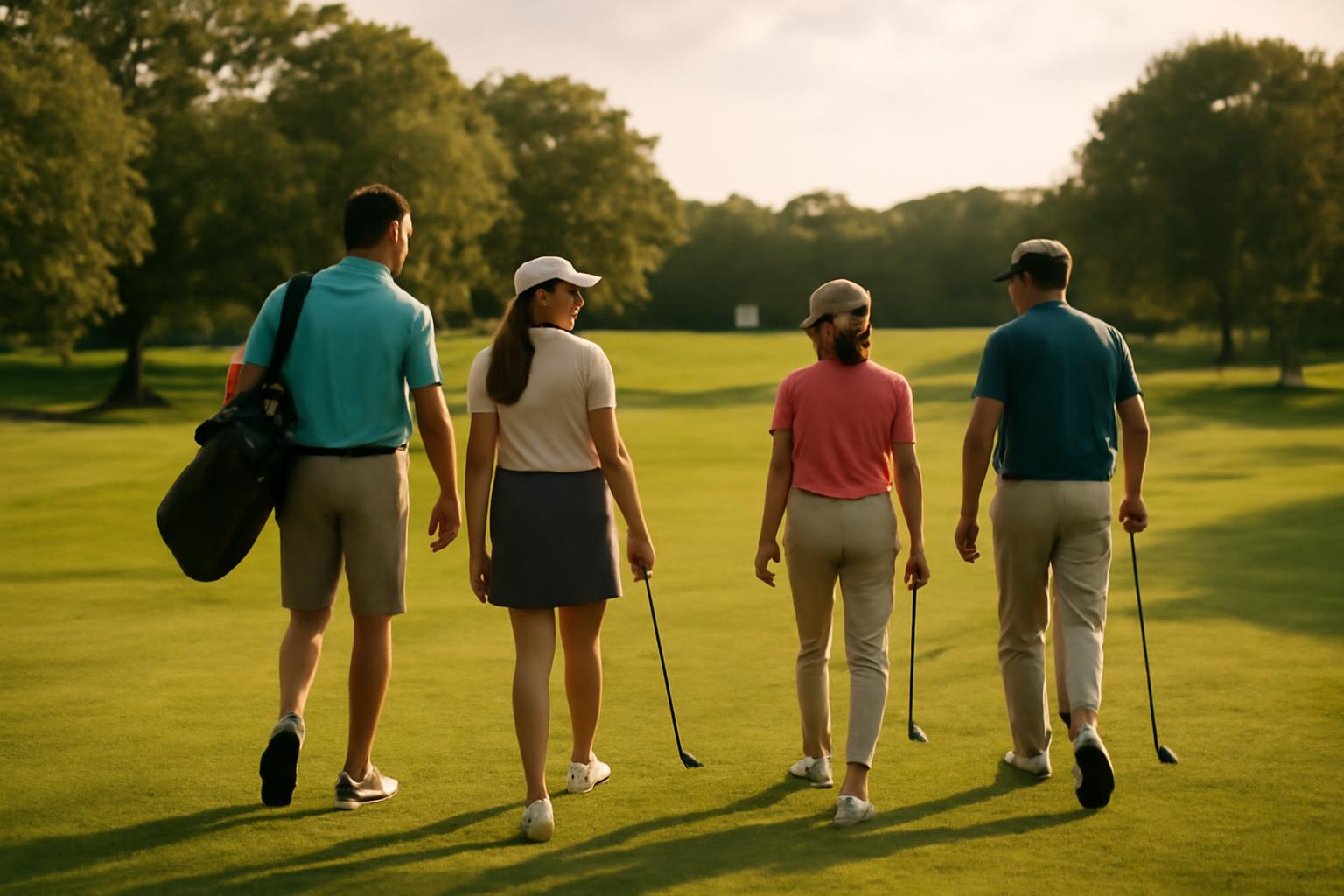
The short answer: budget about two hours for nine holes
Set aside about two hours of playing time for nine holes on a standard-length golf course. A realistic general range is approximately 1.5 to 2.5 hours, depending on group size, experience, course difficulty, and traffic. These are planning estimates—not a measured universal average or a guaranteed finishing time. Palm Desert Golf Country Club publishes the same broad range and identifies those variables as important factors.
Faster rounds require favorable conditions. An efficient solo golfer may finish in 60 to 90 minutes, while an experienced pair on an open course may take 75 to 105 minutes. Beginners or groups facing congestion, a difficult layout, or repeated ball searches may need 2.5 to 3 hours. Paradise Golf Course presents these group-size figures as practical planning ranges rather than guarantees.
Those estimates refer to playing time. They do not include:
- Driving to and from the course
- Parking and unloading equipment
- Checking in and paying
- Collecting rental clubs
- Receiving or loading a cart
- Warming up
- Waiting for the scheduled tee time
- Returning equipment after the round
If you have a fixed appointment afterward, plan conservatively. Your group can control its preparation and playing habits, but its progress may still be limited by traffic ahead.
A practical summary is:
- Experienced solo golfer on an open course: potentially 60–90 minutes
- Experienced pair on an open course: potentially 75–105 minutes
- Ordinary recreational round: about two hours
- Beginners, difficult course, or heavy traffic: potentially 2.5–3 hours
- Complete visit to the facility: reserve roughly 2.5–3 hours as a planning buffer, plus travel time
Nine-hole times by group size and playing conditions
Group size affects pace because each additional golfer adds shots, decisions, ball locations, and movement around the course. It does not determine the finishing time by itself. A prepared foursome on an open course can move efficiently, while a solo golfer may spend much of the round waiting behind full groups.
The favorable ranges below reflect published open-course estimates. The ordinary-planning column is a conservative synthesis intended for scheduling rather than a set of directly measured averages. Paradise Golf Course estimates 60–90 minutes for one golfer, 75–105 minutes for two, 90–120 minutes for three, and about 1.75–2 hours for four when conditions are favorable.
Genoa Golf Club gives broader estimates of 1.5–2 hours for two players, 1.75–2.25 hours for three, and 2–2.5 hours for four, while allowing up to three hours for beginners. Its figures are estimates published by a golf-course business, not independently measured national averages.
| Group | Favorable open-course estimate | Conservative planning estimate | Conditions that could make the round slower |
|---|---|---|---|
| One golfer | 60–90 minutes | 90 minutes to 2 hours | Groups ahead, frequent searches, difficult routing, long green-to-tee distances |
| Two golfers | 75–105 minutes | 1.5–2 hours | One or both players are beginners, a busy tee sheet, hazards, cart restrictions |
| Three golfers | 90–120 minutes | About 2 hours | Congestion, an unfamiliar course, extra shots, long transitions between holes |
| Four golfers | About 1.75–2 hours | 2–2.5 hours | Beginner group, difficult layout, lost balls, weather, repeated waits |
| Delayed group scenario | Not applicable | 2.5–3 hours | Heavy traffic, multiple beginners, difficult conditions, frequent searches |
One golfer
A solo golfer can sometimes complete nine holes in 60 to 90 minutes, but only when the golfer moves efficiently and the course ahead is open. One hour is a best-case possibility, not a routine expectation.
Solo golfers are especially sensitive to congestion. They may complete their own shots quickly but catch the next group within a few holes. Their eventual finishing time may then resemble the pace of the traffic ahead.
Two golfers
Two experienced golfers on an open course may finish in approximately 75 to 105 minutes. That favorable range assumes that both players prepare promptly and encounter little sustained waiting.
For ordinary scheduling, 1.5 to 2 hours is safer. Allow additional time if either player is new, the course is busy, or the layout involves substantial travel between holes.
Three golfers
Three golfers may complete nine holes in approximately 90 to 120 minutes under favorable or ordinary conditions. A prepared threesome can often maintain a two-hour pace without rushing.
Beginners or congestion can push the round past two hours. The third golfer adds more than another swing: that player may have a separate ball location, club decision, search area, and route through each hole.
Four golfers
A foursome should center its estimate near two hours, while recognizing that published guidance extends from roughly 1.75 to 2.5 hours depending on pace, experience, and traffic. GolfTroop places a typical foursome at around two to 2.5 hours and treats the figure as an estimate.
An experienced foursome can finish in less than two hours when all four golfers remain prepared and the course is unobstructed. That favorable result should not be treated as a promise when booking around another commitment.
When to allow 2.5 to 3 hours
Use the delayed range when several slowing conditions overlap, such as:
- Multiple first-time or beginner golfers
- A crowded tee sheet
- A difficult course with hazards or heavy rough
- Long distances between greens and the next tees
- Repeated searches for balls
- Cart-path restrictions
- Wet, windy, or otherwise difficult conditions
- A formal format involving more deliberate preparation
The purpose of allowing extra time is not to pressure beginners. It is to create a realistic schedule so the group can follow course procedures and enjoy the round without worrying about an appointment immediately afterward.
Course type changes the answer
“Playing nine holes” can describe substantially different golf experiences. Before relying on a time estimate, determine whether the course offers regulation-length holes, a compact par-3 layout, or an executive-style routing.
A standard or championship-length nine is commonly a par-35 or par-36 layout. Under ordinary conditions, use about two hours as the baseline. A nine-hole par-3 course commonly takes approximately one to 1.5 hours, depending on group size and traffic. GolfNow distinguishes championship-length nines from the generally faster experience of a nine-hole par-3 course.
Par-3 layouts can be faster because every hole is short relative to a regulation mix of par 3s, par 4s, and par 5s. Compact routing may also reduce the distance between shots and between one green and the next tee.
An executive course is generally faster than a championship-length layout because it usually has a shorter overall routing and a higher concentration of short holes. However, “executive” is not a standardized promise of a particular completion time. A busy executive course can still involve substantial waiting, and some have enough longer holes or green-to-tee travel to take more time than expected.
Do not apply the par-3 estimate automatically whenever a course advertises nine holes. Before booking, check:
- The scorecard: Is the nine par 27, par 30, par 35, or par 36?
- The hole mix: Are all holes par 3s, or are there par 4s and par 5s?
- The routing: Are greens and tees close together or widely separated?
- The posted pace: Does the facility publish an expected nine-hole time?
- Current conditions: Are carts restricted or particular areas congested?
Ninety minutes may be reasonable for a compact par-3 course but overly optimistic for a regulation nine with long holes, substantial elevation changes, or a full tee sheet.
What makes a nine-hole round faster or slower
Two rounds with the same number of holes can have very different finishing times.
1. Course traffic
Traffic can override every other estimate. A quick player may still spend several minutes waiting on tees or approaches when the group ahead has not moved out of range.
Congestion can also compound. One delayed group causes the following group to wait, which then affects the group behind it. The visible group ahead may appear slow even when it is also waiting.
When the course is full, compare your group’s position with the normal flow of traffic. Stay prepared and close unnecessary gaps, but continue to follow the facility’s safety and pace procedures.
2. Group size
More golfers generally mean more shots, ball locations, and decisions. Four players may need to travel to opposite sides of a fairway, choose different clubs, rake separate bunkers, and putt from several positions.
Group size is only part of the answer. A well-organized foursome may play faster than an unprepared pair because several golfers can assess distances and select clubs at the same time when circumstances permit.
3. Player experience
Beginners may take more strokes, need longer to choose clubs, and search for more balls. Unfamiliarity with course flow can also cause delays—for example, leaving a bag on the wrong side of a green or returning to a cart for another club.
That is a reason to budget more time, not a demand to hurry through every shot. New golfers can support a reasonable pace by choosing appropriate tees, preparing while others play, keeping equipment organized, and understanding the group’s casual format before starting.
4. Layout and difficulty
Course design affects both playing time and travel time. Long holes require more shots and movement than short holes, while widely separated tees can make transitions significant even when the group plays efficiently.
Features that may add time include:
- Elevation changes
- Water and other penalty areas
- Bunkers and heavy rough
- Narrow landing areas
- Difficult greens
- Blind shots
- Long walks from a cart path to the ball
- Multiple or widely separated teeing areas
Pins & Aces identifies hazards, elevation changes, long distances between holes, poor course flow, crowds, and player skill as factors that can lengthen a round. Its guide also notes that formal events may involve more waiting and deliberate preparation.
5. Weather and course conditions
Rain, strong wind, saturated ground, and poor visibility can slow play. Golfers may need more careful club selection, additional equipment handling, or more time walking over wet and uneven surfaces.
Course restrictions can matter as much as the weather. After rain, a facility may require carts to remain on designated paths, forcing golfers to walk between the path and their balls while carrying several possible clubs.
There is no dependable fixed delay to add for rain, wind, or cart restrictions. The effect depends on severity, routing, player preparation, and whether the conditions also create congestion.
6. Group habits
Small pauses can accumulate across nine holes. Common examples include:
- Calculating distance only after it becomes your turn
- Taking numerous practice swings
- Leaving clubs or a bag on the wrong side of a green
- Returning to a cart for a different club
- Conducting an extended ball search
- Recording scores while the group remains beside the green
- Starting a conversation when the group is otherwise ready to play
No single pause necessarily causes a major delay. Repeating the same pause across several players and nine holes can make a meaningful difference.
Formal and tournament golf may operate differently from casual recreational play. Follow the event’s requirements rather than assuming every casual pace technique applies.
Walking versus riding: when a cart actually helps
A golf cart may make nine holes faster, but it does not provide a universal time saving.
Riding is most likely to help on a long course with widely separated holes, substantial green-to-tee travel, or a routing that is physically demanding to walk. The benefit is greatest when the course ahead is open and the cart can travel reasonably close to each player’s ball.
A cart offers much less advantage when every tee is occupied. It may move the group to the next waiting point sooner, but it cannot eliminate congestion. Under Armour likewise qualifies its cart guidance by stating that riding can reduce travel time when no groups ahead are causing delays. Its article does not support assigning a fixed cart-time saving to every round.
Cart-path restrictions can also reduce or erase the advantage. Two players sharing a cart may need to:
- Drive to the appropriate side of the hole.
- Estimate the distance from the path to each ball.
- Carry several possible clubs across the fairway.
- Play their shots.
- Walk back to the cart before continuing.
Efficient shared-cart use helps when the course permits it. One player can be dropped near a ball while the other continues toward a separate position. Golfers can also take several likely clubs when leaving the cart and park near the green in a permitted location that supports an efficient departure toward the next tee.
Walking remains compatible with a reasonable pace. On a compact layout, a prepared walker may move directly toward the ball while cart users follow prescribed routes. Walkers can help by organizing their clubs, moving promptly between shots, and placing bags on the side of the green nearest the next tee when appropriate.
Choose between walking and riding based on:
- The length and compactness of the routing
- Elevation and physical demands
- Distances between holes
- Current cart rules
- Whether carts may leave the path
- Expected course traffic
- Your group’s mobility and familiarity with shared-cart use
The best option depends on the particular course and the day’s conditions—not merely on which mode of travel has the higher top speed.
How much time to reserve for the complete golf-course visit
When planning around a two-hour round, reserve roughly 2.5 to 3 hours for the complete facility visit. This is a conservative planning buffer, not an established standard or guarantee. Paradise Golf Course recommends the same window and gives an example that combines early arrival, warm-up, play, and equipment return.
The additional time may need to cover:
- Parking and unloading
- Check-in and payment
- Rental-club collection
- Cart assignment
- A brief warm-up
- Waiting for the tee time
- Restroom or water stops
- Returning a cart or rental equipment
- Packing up and leaving the property
Here is a practical schedule for a 10:00 a.m. tee time:
| Time | Activity |
|---|---|
| 9:30–9:35 a.m. | Arrive, park, and unload |
| 9:35–9:45 a.m. | Check in, pay, and collect rentals or a cart |
| 9:45–9:55 a.m. | Brief warm-up and final preparation |
| 10:00 a.m. | Tee off |
| Around noon | Finish if the round takes approximately two hours |
| Noon–12:15 p.m. | Return equipment, pack up, and leave |
| Up to 12:30 p.m. | Additional buffer for a modest delay |
Beginners should favor the longer end because check-in, equipment setup, and course procedures may be unfamiliar. The same applies to golfers renting clubs, visiting the property for the first time, or needing to locate a separate practice area and starting tee.
Travel belongs outside this window. A three-hour facility block does not include driving from home, dealing with road traffic, stopping for food, or traveling to the next appointment.
When a post-round commitment cannot be missed, add a larger buffer or choose an earlier tee time. Checking the course’s booking schedule and likely demand can also help when selecting a time-sensitive round; see this guide to tee-time booking windows for practical booking considerations.
A simple two-hour pace plan
A two-hour round equals 120 minutes across nine holes, producing an arithmetic average of approximately 13 minutes per hole. The calculation is a pacing aid, not a mandatory limit for each hole.
Use these rough checkpoints:
| Checkpoint | Approximate elapsed time |
|---|---|
| After hole 3 | 40 minutes |
| After hole 6 | 80 minutes |
| After hole 9 | 120 minutes |
Individual holes will vary. A short par 3 may move quickly, while a long par 5, difficult green, substantial walk to the next tee, or wait for the group ahead may take longer.
The clock is only one measure. Also compare your position with the group ahead. If normal traffic is directly in front of you, rushing will not improve the course’s overall flow. If a full open hole develops and your group is not being delayed, preparation and movement may need to become more efficient.
When falling behind:
- Determine distances earlier.
- Choose clubs before it is your turn.
- Reduce unnecessary practice swings.
- Carry extra likely clubs when away from a bag or cart.
- Keep gloves, tees, markers, and balls accessible.
- Move promptly after shots.
- Record scores after leaving the green area.
- Keep searches brief and follow the course’s applicable procedure when a ball cannot be found.
The objective is to remove idle time, not to rush a swing or disregard course safety procedures.
How to maintain pace without rushing
Efficient golf is mainly about preparing earlier and moving intelligently. It does not require sprinting, abandoning every routine, or playing before the course permits it.
During casual play, use ready golf when it is safe and the course allows it. This means a golfer who is prepared may play instead of everyone waiting unnecessarily for a rigid order. It still requires awareness of other players and a clear hitting area. Yatta Golf describes ready golf in the same general terms and also recommends advance planning, organized equipment, shorter routines, and brief searches.
A practical before-the-shot routine is:
- Assess the lie and likely distance while other golfers play.
- Choose a club before your turn when possible.
- Take a limited number of purposeful practice swings.
- Move into position when permitted.
- Play once the hitting and target areas are clear.
Equipment organization also matters:
- Keep spare balls, tees, a marker, and a repair tool accessible.
- Carry more than one likely club when walking away from a cart.
- Position bags or carts toward the next tee when permitted.
- Record scores after clearing the green.
- Watch other players’ shots when possible so balls are easier to locate.
Keep ball searches brief and follow the course’s procedures when a ball cannot be found. In casual golf, less experienced players may also pick up when the group’s agreed format permits it.
Beginners can maintain pace by:
- Selecting tees suited to their current ability
- Preparing before it is their turn
- Bringing enough balls and tees
- Asking about the format before starting
- Watching where each shot finishes
- Moving directly toward the ball when appropriate
- Picking up in casual play when the agreed format allows
Before booking, ask the course or pro shop:
- What is the posted pace for nine holes?
- Is the tee sheet expected to be full?
- Are carts restricted to paths?
- Is walking practical on the routing?
- How early should players arrive?
- Where do nine-hole players check in and start?
- Are there local pace or ball-search procedures to know?
Course-specific information is more useful than forcing every facility into one universal estimate.
Frequently asked questions
Can a solo golfer finish nine holes in one hour?
Yes, under unusually favorable conditions. The golfer must move efficiently, encounter little or no traffic, and play a layout that permits quick travel. Under Armour presents one hour as a possible result for a fast solo player using a cart, but only when the course is unobstructed.
Treat 60 minutes as a best-case possibility, not the expected solo time. The broader favorable range is 60 to 90 minutes, and traffic can extend the round toward the pace of the groups ahead.
How long does nine holes take for beginners?
Beginners should generally plan for about two hours or more, with 2.5 to 3 hours possible for a beginner group on a crowded or difficult course. Genoa Golf Club allows up to three hours for beginners and attributes the extra time to additional strokes, searches, group size, hazards, and traffic.
New golfers do not need to rush. Suitable tees, advance preparation, organized equipment, and an agreed casual format can help the group maintain pace.
Can a foursome realistically finish nine holes in under two hours?
Yes. An experienced foursome can finish in under two hours when the course is open, everyone remains prepared, and the routing does not add excessive travel. GolfNow describes this as a favorable, unobstructed scenario rather than a guaranteed foursome time.
For scheduling, center the estimate around two hours and allow as much as 2.5 hours when conditions are slower.
Should I ask the course how long its nine holes usually take?
Yes.
Ask whether the quoted time refers to a regulation nine, par-3 course, or executive layout. Also confirm how early to arrive and whether the estimate includes check-in or only on-course play.
Does a cart always make nine holes faster?
No. A cart can help on a long or widely spaced layout when the course ahead is open. It may offer little advantage when groups are waiting on every tee.
Cart-path restrictions can further reduce the benefit because players must walk between the path and their balls. Base the decision on routing, current cart rules, expected congestion, and the group’s ability to use a shared cart efficiently.
The bottom line
Start with about two hours for nine regulation-length holes. Use less time only for a small, experienced group on a genuinely open course, and add time for beginners, difficult routing, cart restrictions, repeated searches, or heavy traffic. The broader 1.5-to-2.5-hour planning range remains useful precisely because no single finishing time applies to every course or group. Palm Desert Golf Country Club likewise presents that range as conditional rather than guaranteed.
For the entire facility visit, reserve roughly 2.5 to 3 hours, then add travel separately. If the timing matters, ask the course for its posted nine-hole pace and current conditions before committing to plans immediately after the round.