
Understanding players distance irons
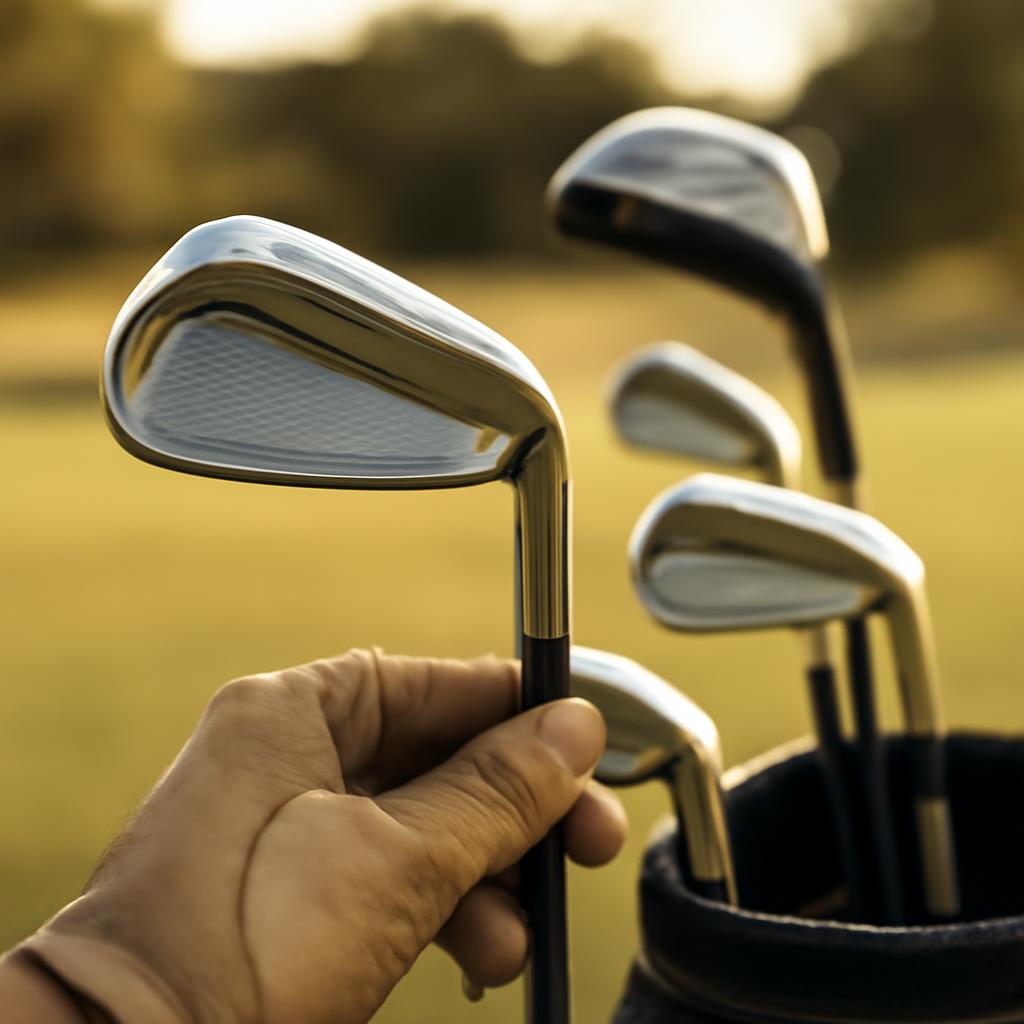
Players distance irons sit in one of golf’s most crowded and least tidy equipment categories. Across category explainers, retailer collections, and test articles, they are generally presented as irons that try to combine more ball speed and forgiveness than traditional players irons with a sleeker shape and more control than most game-improvement models, but the boundaries are blurry and brands do not all build them the same way (MyGolfSpy’s game-improvement vs. players distance explainer).
That fuzziness matters. If you are trying to decide whether players distance irons are right for you, the useful question is not “What is the best one?” but “What problem am I trying to solve?” More speed? Better mishit retention? A cleaner look at address? Easier long irons? Or a bridge away from bulky game-improvement heads without jumping straight into demanding players irons? This guide focuses on that practical decision.
What players distance irons means
In practical terms, players distance irons are usually marketed as the middle ground between three broad iron families: game-improvement irons, players distance irons, and players irons. Multiple sources describe game-improvement irons as the most forgiving and easiest to launch, players irons as the most compact and control-oriented, and players distance irons as the in-between option that preserves some help while looking and behaving more like a better-player club (bogeys2Birdies’ iron-category guide).
That middle-ground description is consistent, but the exact recipe varies. Common traits include:
- a more compact head than a typical game-improvement iron,
- a thinner topline and less offset than many super-forgiving models,
- some form of speed-focused face design,
- and more forgiveness than a traditional players iron, though usually less than a true game-improvement iron.
The phrase also does not mean the same thing as “for low handicaps only.” Some sources still target players distance irons at mid- to low-handicap golfers, while others argue swing speed, strike quality, and launch needs matter more than handicap labels (Fairway Jockey’s players distance category page). That is a better way to think about them. A golfer with a modest handicap but weak launch or inconsistent strike may still benefit more from game-improvement help, while a mid-handicapper with decent speed and contact may prefer a players distance shape.
A simple way to translate the category into real-world use:
- Choose players distance irons if you like a cleaner, less bulky look but still want the club to do some work for you.
- Be cautious if your main problem is simply getting the ball airborne or you need maximum forgiveness.
- Also be cautious if your scoring depends more on exact yardage windows and stopping power than on squeezing extra carry from the same stamped club number.
Just as importantly, category labels overlap. MyGolfSpy notes that the line between game-improvement and players distance irons has become less clear as designs diversify, and TeeBox Golf makes the same point about blurred category boundaries. So “players distance” is best treated as a starting category, not a final answer.
How players distance irons works
Players distance irons usually create their performance through a combination of shape, face design, weighting, and loft structure. Different brands use different construction methods, but the recurring themes are thin faces, hollow or semi-hollow bodies in many models, weighting that preserves speed on misses, and a more compact visual package than most game-improvement irons.
From impact to ball flight, the idea works roughly like this:
-
The face is built to produce speed. Thin, flexible faces or variable-thickness faces are used to raise ball speed, especially relative to older compact irons.
-
The head is weighted to protect imperfect strikes. Many players distance models use hollow-body or cavity-backed designs with internal weighting to keep distance losses smaller on mishits than you might expect from a compact-looking head.
-
The loft and spin profile often help create the “distance” part. A recurring point across sources is that extra yardage often comes at least partly from stronger lofts and lower spin, not just from face technology alone (GolfWRX discussion on distance gains from “distance irons”).
-
The result can be more carry from the number on the sole, but not always better scoring. Lower spin can help carry distance, yet it can also produce a shallower landing flight that makes holding greens harder for some players.
That last tradeoff shows up clearly in standardized testing. In Golf Digest’s 2026 robot test, the PXG 0311P GEN8 posted the longest 7-iron carry at 161.5 yards, while the PING i540 carried 160.0 yards and also produced the tightest reported 95% dispersion at 148 square feet. But the same PING i540 also showed the lowest spin of the group at 4,429 rpm and the shallowest descent angle at 42.8°, which helps explain why “long” and “best for scoring” are not automatically the same thing (Golf Digest’s robot test of players distance irons).
Human testing shows the category behaves as a blend rather than a one-trick speed class. In MyGolfSpy’s 2026 Most Wanted player’s distance test, Wilson DYNAPWR Forged 2026 was the best overall in that framework, with testing that involved 10 iron models, 20 low- and mid-handicap testers, more than 9,600 shots, and performance emphasis on accuracy, distance, and forgiveness using a 5-iron, 7-iron, and pitching wedge (MyGolfSpy’s 2026 player’s distance iron test). That is useful evidence, but it also shows why category buying is tricky: one test can reward balance, another can isolate pure distance, and neither fully captures your own turf interaction or strike pattern.
This is also why golfers sometimes talk past each other about players distance irons. One golfer means, “My 7-iron goes farther.” Another means, “My front-to-back misses got worse.” Both can be true if the set is stronger lofted and lower spinning than what came before.
A practical example: if your old 7-iron and a new players distance 7-iron do not have similar lofts, the carry comparison is partly a loft comparison. GolfWRX posters repeatedly made that point in anecdotal form, with estimates ranging from modest same-loft gains to roughly half a club or a club of extra distance, often credited mostly to loft and spin changes rather than “free” technology (GolfWRX discussion on distance gains from “distance irons”). That is not lab-grade proof, but it is a useful caution when you test.
The main approaches
If you are comparing players distance irons intelligently, there are really three decisions to make.
1. Compare the category against its neighbors
The first comparison is not model versus model. It is players distance versus game-improvement versus players irons.
- Game-improvement irons generally offer the most launch help, the biggest heads, and the most forgiveness on poor contact (bogeys2Birdies’ iron-category guide).
- Players distance irons try to retain meaningful help while shrinking the shape and preserving more shot-shaping and feel than bulkier irons.
- Players irons usually put feel, trajectory control, and precision first, while asking more from the strike.
For many golfers, the real question is not “Do I want players distance irons?” but “Do I want a little more help than a players iron, or a little less help than a game-improvement iron?”
2. Compare different kinds of players distance irons
Within the category, some models lean more toward speed and distance, while others lean more toward balance or control. TeeBox Golf explicitly notes that some players distance models focus more on ball speed at the cost of control, while others offer better spin consistency and control with a little less speed.
A useful shorthand is:
- Distance-first players distance irons: lower spin, faster face behavior, more “hot” long irons, sometimes less predictable front-to-back.
- Balanced players distance irons: try to compete across accuracy, forgiveness, and distance rather than win one category.
- Control-leaning crossovers: sit close to “modern players” or cavity-back players irons and may suit golfers who want feedback and stopping power more than extra raw carry.
Those buckets help explain why rankings disagree. MyGolfSpy’s human-panel test named Wilson DYNAPWR Forged 2026 best overall, while Golf Digest’s robot test highlighted different leaders depending on the metric, including PXG 0311P GEN8 for carry and PING i540 for dispersion (MyGolfSpy’s 2026 player’s distance iron test). GolfMagic, meanwhile, put TaylorMade P790 at the top of its 2025/2026 buyer’s guide. That does not mean one source is right and the others are wrong. It means the category has multiple successful formulas.
3. Compare buying paths: stock, custom, or blended set
Retail availability also shows how many ways this category is sold. Golf Galaxy’s collection page listed 47 players distance products, including stock and custom options from major brands, while Fairway Jockey’s collection also listed 47 products and framed the category around workability plus forgiveness (Golf Galaxy’s players distance iron listings).
Price varies enough to affect the decision. Golf Galaxy showed examples such as TaylorMade P790 at $1,399.99 to $1,499.99, Titleist 2025 T250 at $1,499.99, Mizuno Pro M-15 at $1,505 to $1,720, and custom PING i540 builds at $214.25 per club up to $1,928.25 per set (Golf Galaxy’s players distance iron listings). Fairway Jockey also showed common custom pricing around $199.99 per club for Srixon ZXi5, $200 per club for TaylorMade P790, and $215 per club for Titleist T250. In other words, this is a category where a fitting can improve the result, but it can also push the total quickly.
A fourth path, not always advertised as such, is the blended set: more forgiving long irons with more controlled short irons. Forum golfers discussing distance and category crossover often describe mixed setups or moving away from full players distance sets when they want more feedback or tighter flight windows in scoring clubs (GolfWRX discussion on moving from players distance to cavity-back players irons).
A practical process
If you want a smart answer instead of a marketing answer, use a process.
Step 1: Define the job you need the irons to do
Start with the specific problem:
- Are your long irons hard to launch?
- Are mishits losing too much distance?
- Do you dislike bulky heads at address?
- Are you chasing more carry, or better distance control?
- Are you trying to move from game-improvement to something cleaner-looking without losing too much help?
Those are different jobs, and different players distance irons solve them differently.
Step 2: Build a baseline with your current irons
Before you demo anything, know three things about your current set:
- typical carry,
- typical miss pattern,
- and whether your weak point is height, spin, or contact.
This matters because players distance irons are often sold on “more distance,” but if your current 7-iron is weaker lofted than the test club, the comparison can mislead. Anecdotal GolfWRX discussion and the Ralph Maltby forum both reinforce that loft is a major part of the distance conversation, especially for golfers noticing changing launch conditions (Ralph Maltby forum discussion on aging-golfer iron fitting).
Step 3: Compare loft-for-loft as closely as possible
This is the most important testing habit.
Do not ask only, “Which 7-iron went farther?” Also ask:
- What are the actual lofts?
- What shaft is in each club?
- What is the peak height?
- What is the descent angle?
- What is the front-to-back spread?
Players distance irons can make the same number on the sole fly farther because the club is effectively replacing a different iron in your old set. That may still help you, but you want honest information before you rebuild your gapping.
Step 4: Evaluate center hits and misses separately
Robot testing is useful here because it strips away swing variation. Golf Digest’s test showed major differences not just in carry, but in dispersion and spin profiles among heads tested under the same 7-iron setup. Human-panel testing is also useful because it reflects how golfers actually deliver the club. MyGolfSpy’s test used low- and mid-handicap testers and gathered more than 9,600 shots across multiple irons in the set, which gives broader context on accuracy, forgiveness, and distance as a package.
In your own testing, look for two answers:
- What happens when I hit it well?
- What happens when I miss it low, thin, toe-side, or slightly heavy?
Many golfers buy players distance irons for the second answer, not the first.
Step 5: Test the top and bottom of the set, not just a 7-iron
Most articles and comparisons center on the 7-iron because it is easy to benchmark. But your purchase decision may hinge on the 5-iron and pitching wedge instead. MyGolfSpy’s test included the 5-iron, 7-iron, and pitching wedge, which is a more realistic reminder that a set has to gap at both ends.
That matters because players distance sets often create two practical issues:
- long irons that go far but may not land steeply enough for your game,
- short irons that can produce different distance windows than you expect if lofts are stronger.
If your long irons “fall out of the sky” or stop holding greens as swing speed changes, a more launch-friendly setup, lighter shaft, or hybrids at the top end may be a better fix than simply buying a more aggressive distance iron profile.
Step 6: Price the whole solution, not the demo club
A players distance iron that feels great in a fitting bay can become much less attractive once you price the full set with your preferred shaft and makeup. Retail listings show that fitted builds in this category can approach or exceed the high-$1,000s, especially when priced per club.
Ask for the full quote with:
- set makeup,
- shaft upgrade cost,
- lie/length adjustments,
- grip upgrade,
- and whether you need hybrids or utility irons to complete the top end.
Step 7: Make the final call on scoring, not ego
The best demo is not the one that makes a 7-iron go absurdly far. It is the one that gives you the best combination of playable long irons, trustworthy scoring clubs, and confidence over the ball. If two irons are close, favor the one whose misses you understand.
Common mistakes and tradeoffs
The most common mistake with players distance irons is confusing distance from the club number with distance that helps scoring.
A 7-iron that flies like your old 6-iron is not automatically a better scoring tool. It may simply be stronger lofted and lower spinning. GolfWRX posters repeatedly raised that point, and MyGolfSpy’s category explainer also emphasizes that players distance irons are fundamentally distance-first relative to players irons.
A second mistake is ignoring stopping power. Low spin and shallow descent can win a distance test and still make life harder on firm greens. The PING i540’s strong robot-test carry and very low spin illustrate the tradeoff clearly: impressive speed and dispersion under that setup, but also the shallowest descent angle in the group. Whether that helps or hurts depends on your launch, course conditions, and the shots you face most.
A third mistake is buying by handicap stereotype. Several sources still map categories to handicap bands, but others argue swing speed and strike quality are better selectors. A low-handicapper can still need more launch help. A mid-handicapper can prefer a tighter, more controlled head.
A fourth mistake is treating all rankings as if they answer the same question. They do not.
- Robot tests isolate head behavior under fixed conditions.
- Human-panel tests show how clubs perform across real swings.
- Retail pages show availability and price, not performance.
- Forum threads reveal common user experiences, but they are anecdotal.
That is why no single model wins everywhere. Wilson DYNAPWR Forged 2026 topped one major human-panel test, while PXG 0311P GEN8 and PING i540 stood out in a robot comparison, and TaylorMade P790 remains a recurring benchmark in editorial guides and retail listings.
A fifth mistake is underrating feel and feedback. This is harder to quantify, but it still matters. In one GolfWRX thread, a golfer moving from TaylorMade P790 players distance irons toward cavity-back players irons described preferring the feel, feedback, and stopping power of the latter, even without a dramatic carry difference. That is anecdotal, not definitive, but it points to a real tradeoff: a more protected strike can sometimes give less information about contact.
Finally, golfers often forget that the “right” answer may be not a full-category switch. Some players need only a more forgiving long iron, a different shaft, or a hybrid replacement at the top of the set. The Ralph Maltby discussion is especially useful for older or slower-speed golfers because it frames loft, launch, shaft weight, and hybrid use as parts of the solution rather than assuming a deeper jump into players distance design will solve everything.
How to choose the next step
A sound next step comes from matching the club to your actual ball-flight need.
Players distance irons are a strong candidate if:
- you want a more compact shape than a game-improvement iron,
- you still need meaningful help on slight mishits,
- you want more speed than a traditional players iron tends to offer,
- and your launch is good enough that lower spin will not immediately become a problem.
You should compare them directly against game-improvement irons if:
- your main issue is launch,
- you need maximum forgiveness,
- or you regularly struggle to get long irons airborne.
You should compare them directly against players or cavity-back players irons if:
- your strike is fairly consistent,
- you care deeply about distance control and green-holding,
- or you want more feedback than a springier, more protected head gives you.
The most practical next action is simple:
-
Shortlist three heads across the spectrum, not three nearly identical players distance irons. Example: one game-improvement iron, one balanced players distance iron, and one control-leaning compact iron.
-
Use the same or very similar shaft.
-
Compare actual lofts and set makeup.
-
Record carry, spin, peak height, descent angle, and left-right plus front-back dispersion.
-
Hit enough balls to include misses.
-
Check the 5-iron or longest iron you would actually play, and the short iron or wedge end.
-
Price the full build before deciding.
If your test still leaves you unsure, lean toward the club that gives you the most understandable miss pattern and the most believable gapping. Golf is played with the whole set, not with one hot 7-iron.
So the concrete next step is this: book a fitting or a structured demo session and test players distance irons loft-for-loft against one game-improvement option and one players-style option. If the players distance model wins on playable carry, acceptable stopping power, and tighter real dispersion, you have your answer. If not, the category may be close to what you need without being exactly what you should buy.
What should a beginner know about players distance irons?
A beginner should know that players distance irons are usually not the automatic starting point just because the name sounds advanced. They are typically positioned between game-improvement irons and players irons, offering a more compact shape than game-improvement while still trying to keep some forgiveness and speed. If your main needs are easy launch and maximum help on mishits, you should compare them carefully against game-improvement irons rather than assuming the middle category is better.
What are the main risks of players distance irons?
The main risks are buying more yardage on paper without getting better scoring, ending up with lower-spin shots that do not hold greens as well, and confusing stronger lofts with true head performance. Golf Digest’s robot test shows how low-spin, long-flying models can also produce shallower descent angles, and GolfWRX discussion shows many golfers believe much of the extra distance comes from loft and spin rather than technology alone. Another risk is paying premium custom-build prices for a set that does not actually solve your launch or control problem.
How do you evaluate players distance irons options?
Evaluate them by comparing loft-for-loft, not just club-number against club-number. Check carry, spin, height, descent angle, and both left-right and front-back dispersion. Test a long iron and a short iron, not only a 7-iron. Use a similar shaft across candidates, and price the full build before deciding. That approach matches the evidence that distance gains are often tied to loft structure, while performance differences inside the category show up in dispersion, spin, and forgiveness as much as pure carry.
Sources
- Third Party · Game-Improvement vs. Players Distance Irons: What’s the Difference? | MyGolfSpy.
- Blog · Game Improvement, Players-Distance or Players Irons? - TeeBox Golf.
- Third Party · Understanding the Difference Between Iron Sets – bogeys2Birdies.
- Ecommerce · Player’s Distance Irons – Fairway Jockey.
- Third Party · Best Players Distance Golf Irons 2025: Buyer’s Guide and things you need to know.
- Third Party · Game Improvement vs Players Distance Irons - Golfalot.
- Forum Thread · How many yards can you gain with “distance irons?” - Equipment - GolfWRX.
- Forum · Ralph Maltby | Iron Fitting Questions…Aging Golfer Slower SS’s…Player’s Distance or Modern Player’s Lofts?.
- Equipment Review · What robot testing revealed about 10 players-distance irons for 2026 | Golf Equipment: Clubs, Balls, Bags | GolfDigest.com.
- Third Party · Best Player’s Distance Irons of 2026 for Golfers | MyGolfSpy.
- Third Party · Player’s Distance Irons | Free Shipping at Golf Galaxy.
- Forum Thread · Moving from Players Distance to Cavity Back Players irons? - Equipment - GolfWRX.